Book Review: The Essex Serpent by Sarah Perry - Gothic Storytelling in Victorian England
Some novels win you over with plot. Sarah Perry's The Essex Serpent wins you over with damp, cold air, the smell of mud at low tide, and the sense of a rumour travelling faster than the truth. Published in 2016 and set in 1893, it follows Cora Seaborne from London to a village on the Essex coast, where something is said to be living out in the estuary.
What follows is less a monster hunt than a study of how people cling to ideas when the ground shifts under them. For anyone interested in gothic storytelling, it is a lesson in how atmosphere can carry a whole novel.
The Story, Briefly
Cora is recently widowed, and the book is honest enough to admit she is not sorry. Her husband was cruel in the ordinary, respectable way. Freed, she takes her son Francis — a boy who prefers catalogues and dead things to people — and her companion Martha to Aldwinter, a village of mudflats, oyster beds and chapel gossip.
There she meets William Ransome, the local vicar. He is rational, kind and tired. His parish is convinced the serpent has returned to the Blackwater; he is convinced that fear is a sickness that spreads. His wife Stella is ill in a room upstairs. In London, meanwhile, the surgeon Luke Garrett waits for Cora to notice him.
The serpent is never explained. That is the point.
Atmosphere: Letting the Weather Do the Work
Perry does not frighten you with fangs. She frightens you with wet rope, a low tide that goes further out than it should, a child's drawing pinned to a wall. The dread in this novel is ambient. It lives in the way a village looks at a newcomer, in footsteps in a lane at dusk, in the suspicion that the sea is keeping something back.
For writers, there is a clear lesson here. Notice how little the book needs to show. The creature is a hole in the middle of the story, and everything else — the mist, the fossils, the arguments in the church porch — circles it. If you want to create unease, resist the reveal. Describe the reaction instead: the tight faces, the broken fence, the boat that came back empty.
The Voice: Present Tense, Roaming Eye
The novel is told in the third person present tense, which was unusual enough at publication and remains quietly disruptive. Nothing feels settled. Events arrive as they happen, without the comfort of a narrator who has already survived them. It gives the book a restlessness that suits a story about a widow discovering she can do as she pleases.
Perry also borrows the omniscient camera of the Victorian novel. She drifts between heads, slips into letters, and now and then addresses the reader with a confidence that borders on dry comedy. The result feels period and modern at once. She never pastiches nineteenth-century prose; the sentences are hers — short, clean, often beautiful.
That balance is worth studying. Imitation of Victorian writing falls flat when it becomes a performance. Perry takes the preoccupations — faith, science, propriety, death — and delivers them in a contemporary voice.
History Without the Dust
The intellectual weather
1893 is not decoration here. Darwin has been dead for more than a decade, and educated people are still arguing about fossils, extinction and what is left of the soul. Cora hunts for bones on the shore and treats the serpent as a possible species rather than a demon. William treats it as a symptom of fear. Neither of them is entirely wrong, which is what gives their arguments their charge.
The material detail
Around them, Perry assembles a working Victorian world: suburban London with its damp villas, the marshes with their reeds and wading birds, a hospital ward where a surgeon's hands matter more than his manners, and the slow arrival of things we now take for granted. The research never sits on the surface like a display case. It shows up as a hard chair, a cough, a train timetable.
Where It Wobbles
Not everything works. The middle loses its shape. Once the setting and the central tension are established, the plot drifts, and several subplots — Luke's hospital ambitions, Martha's politics, the Ambrose household — run alongside the main story rather than through it.
Some readers will find the ending's restraint maddening. Perry refuses to tell you whether the serpent is real, and while that ambiguity is the novel's whole argument, it does not make for a tidy final chapter. Stella, whose illness shadows everything, is more a pressure on other people than a person in her own right. And the prose occasionally admires itself a little too much.
These are the complaints of a reader who liked the book. Worth knowing before you start, not reasons to avoid it.
How to Read It Well
- Don't read it as horror. Expect unease rather than scares and you will enjoy it far more.
- Keep track of the names. For the first fifty pages, note who is related to whom. Aldwinter is small, but the cast is not.
- Watch the weather. It carries the mood and marks the passing of the year. Treat it as narration, not background.
- Read the letters closely
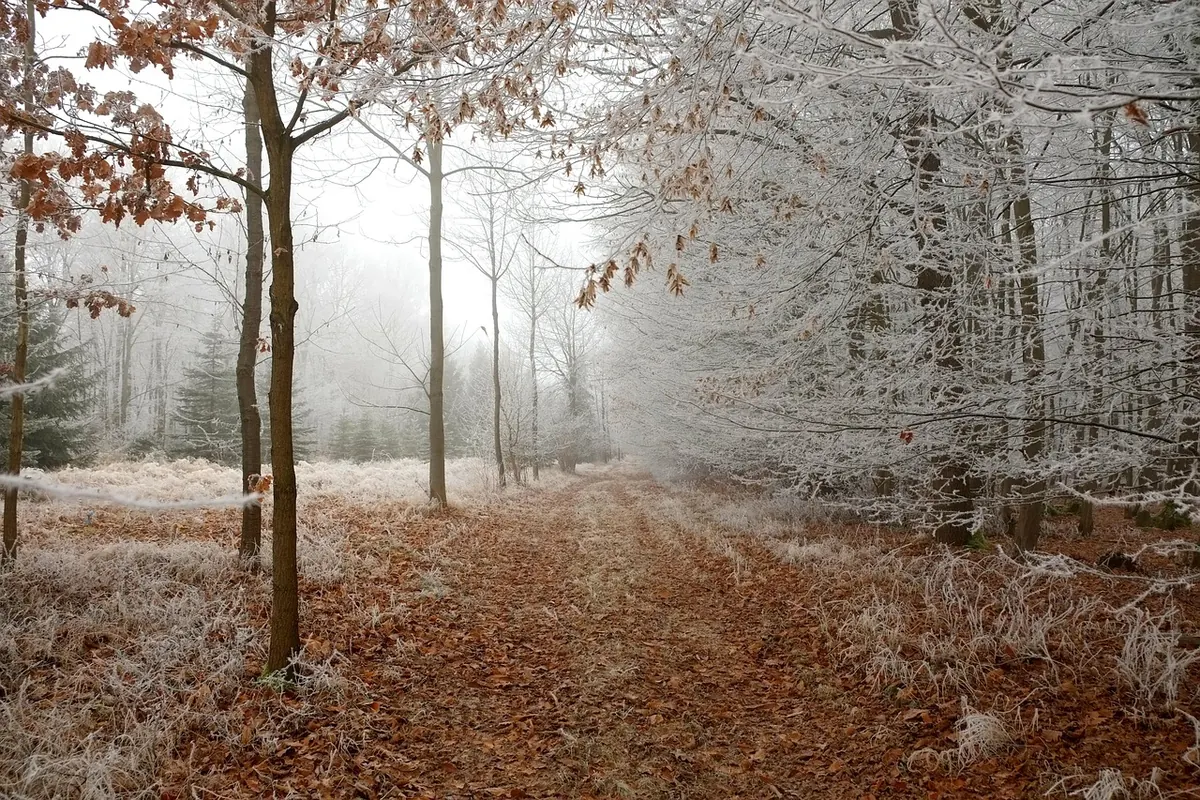
Photo: wal_172619 / Pixabay

You Might Also Like
From parish records and village memory to tense, place-aware storytelling: a practical guide to researching a British local legend and turning it into a short story.
A practical beginner's guide to haiku, explaining structure and seasonal words, with observation exercises, example rewrites and a month-by-month calendar of British weather and wildlife to write from.