A Beginner's Guide to Haiku: Capturing British Seasons in Three Lines
Haiku look easy. Three short lines, a note about the weather, done in five minutes — except the five-minute ones are usually the ones nobody remembers. The form rewards attention far more than cleverness. If you can watch a sparrow in a hedge for ten minutes without getting bored, you already have most of what you need. And if you live in Britain, you have one of the great advantages a haiku poet could ask for: weather that changes its mind four times before lunch, and a calendar of small arrivals and departures running from snowdrops to fieldfares.
What a Haiku Is, and What the 5-7-5 Rule Really Means
The Japanese haiku is built on seventeen on — sound units that are not the same as English syllables. Translators rarely force the 5-7-5 pattern because it makes English poems padded and stiff. Many contemporary writers aim instead for something short-long-short, often somewhere between ten and fourteen syllables in total.
Whatever the count, the essentials are consistent. A haiku is usually written in the present tense, has no title and does not rhyme. It holds one or two concrete images, taken from the world rather than from the imagination, and it makes a turn — a small shift between the two parts that leaves a gap for the reader to step into. That gap is the poem's real work. You are not explaining a feeling; you are arranging two things so that the feeling arrives on its own.
The Season Word: Your Quiet Engine
Japanese haiku have kigo, a season word that places the poem in a particular moment of the year. English-language haiku keep the habit without the rulebook. A single well-chosen seasonal marker does more than three lines of description: it tells the reader the week, not just the season, and it sets the emotional temperature.
"Rain" is weak. "February rain", "rain on the allotments", "rain hammering the wheelie bin lid" — that is a poem already beginning. Specific marks are everywhere once you start collecting them: frogspawn, hawthorn, the first swift, conkers, the smell of a bonfire, frost on a windscreen that stays all day, blackberries that never ripened because August was grey.
Notice that the season does not have to be pretty. A haiku about February sleet on a bus shelter can be as true and as moving as one about bluebell woods, and it is far less likely to have been written a thousand times before.
Learning to Look: Close Observation Practice
Observation is a muscle. The good news is that it can be trained on the walk you already do. Sit or stand in the same spot once a week — a kitchen window, the end of the garden, a bench on the promenade — and write down three things that have changed since last time. Not three beautiful things. Three accurate ones.
Then push for smaller detail. Not "birds in the hedge" but which bird, doing what, to whom. Not "it was raining" but what the rain was landing on and how it sounded. Ask what the smallest visible event of the last ten minutes was. Often that is your poem.
Places that repay repeated visits:
- a kitchen window with a bird feeder in view
- the same ten metres of canal towpath
- an allotment, especially in late summer
- a churchyard with old yews and longer grass
- a seafront or estuary, where weather arrives visibly
- a bus stop, which is where most British weather is actually experienced
Cut, Then Cut Again
First drafts are usually too helpful. They explain, they decorate, they tell the reader what to feel. Haiku do none of these things. Go through your draft and remove anything that does: beautiful, gently, quietly, peaceful, sadly. Keep verbs that carry weight and nouns that are specific. Two images are usually enough; three is a crowd.
Then look for the turn. In English this is often a dash or a line break, doing the job of the Japanese cutting word. The turn sets one picture against another so that the space between them hums:
November rain / a robin's whole attention / on the worm
Nothing is explained there. The weather and the bird are simply allowed to sit next to each other.
Weak Line, Better Line: Three Quick Rewrites
First attempt: "The golden autumn leaves drift gently to the cold ground." Three adjectives, no turn, and a picture we have all seen. Strip it back and find one exact moment instead:
first frost / the last nasturtium / still holding colour
Second attempt: "The beautiful bluebells carpet the silent, peaceful wood." The words are doing the looking for us. Try putting a person into the scene, at a distance:
bluebell wood / someone has dropped a glove / on the path
Third attempt: "I feel so sad now that the swifts have gone away." Naming the feeling kills it. Let the absence speak:
last swift — / the sky above the retail park / empty again
In each case the improved version is plainer. That is not a coincidence. In haiku, plainness is not a lack of craft; it is what craft looks like when it is finished.
A Year of Small Signals for Your Notebook
Keep a page per month and note what you actually see, where you live. Dates vary by region and by year, so treat these as prompts rather than a timetable.
- January: hazel catkins, first snowdrops, robins singing under streetlights after dark
- February: queen bumblebees out on mild days, great spotted woodpeckers drumming
- March: frogspawn in ponds, blackthorn blossom, the first chiffchaff singing
- April: swallows and cuckoos back, bluebells opening, hail between sunshine
- May: hawthorn in flower, screaming parties of swifts overhead
- June: elderflower, bats at dusk, the longest evenings
- July: meadows cut for hay, foxgloves going over
- August: heather on the moors, blackberries, house martins gathering on wires
- September: conkers, dew-heavy spider webs, swallows lining up on telephone lines
- October: leaf fall, fungi in the litter, redwings arriving late in the month
- November: bare branches, valley mist, fieldfares stripping the hawthorn
- December: holly berries, hard frost, the shortest day
Start This Week: A Short Practice Routine
You do not need a course or a special notebook, though a small one that fits a coat pocket helps. Commit to a modest routine and let it run for a season.
- Choose one place you pass anyway, and visit it twice a week at roughly the same time.
- Look for one thing only — a single bird, a single surface the weather is landing on.
- Write it down in the plainest words you can manage. No adjectives on the first pass.
- Leave it overnight, then cut anything the reader could have guessed.
- Read it aloud. If a word snags, replace it or remove it.
- Keep every attempt, including the failures. Six months of notes will teach you more than any rule.
Write five a week. Most will be ordinary, and that is exactly how it should be — haiku are not designed to be masterpieces, they are designed to make you look properly at a wet Tuesday in March. Read widely, too: translations of Bashō, Issa and Buson are useful for tone, and the British Haiku Society publishes a journal if you want to see what other people are doing with the same drizzle. Then go back to your window. Something is happening out there right now, and it will only last a week or two.
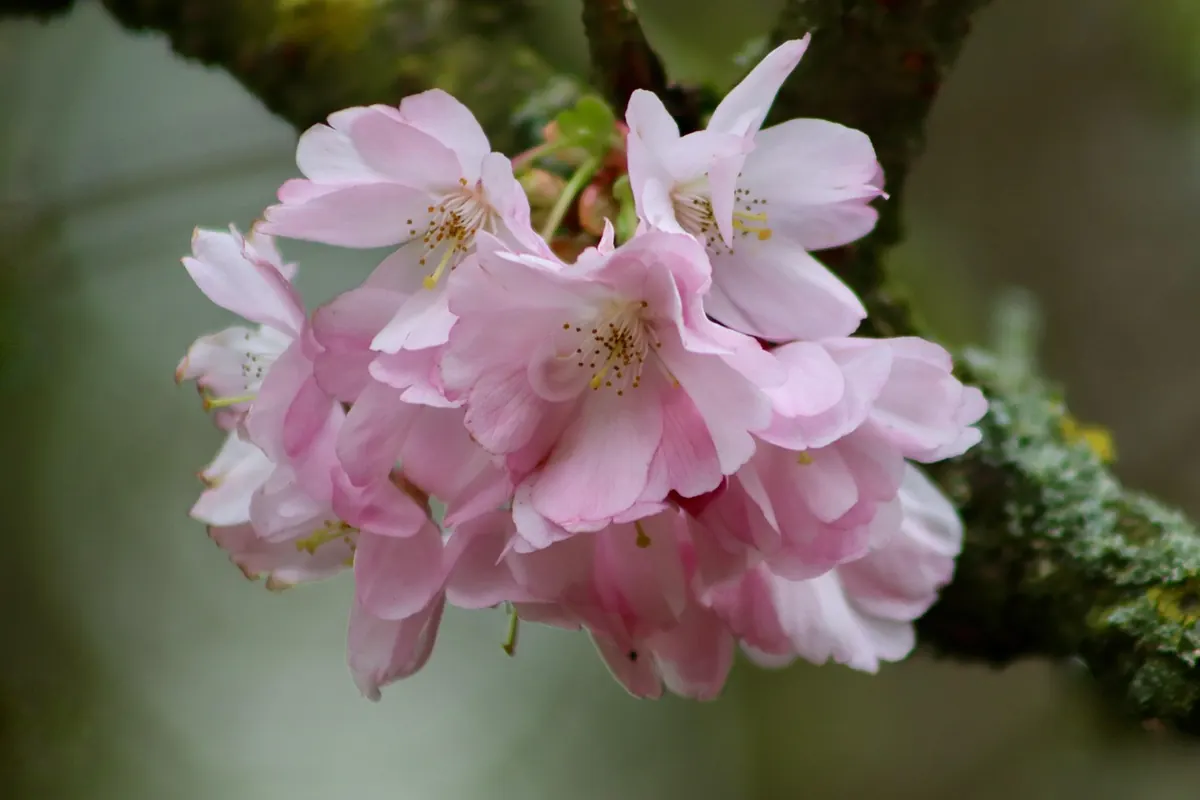
Photo: Nennieinszweidrei / Pixabay


You Might Also Like
From parish records and village memory to tense, place-aware storytelling: a practical guide to researching a British local legend and turning it into a short story.
A practical look at how written and spoken storytelling differ in rhythm, repetition and audience feedback — and what each form can teach the other.