Local Legends: How to Research and Retell a British Folktale
Every parish has one. A lane where a coachman without a head is said to drive at dusk, a standing stone that turns when nobody is watching, a drowned village whose bells ring on certain nights. These stories survive because people kept telling them. Turning one into a short story that works on the page takes two different skills: the patience of a researcher and the instincts of a fiction writer.
Start with the version you already know
Before you open a book or a search box, write down the legend as you first heard it. Where was it set? Who told you? What frightened you about it? Memory is unreliable, and that is the point: your half-remembered version is already a retelling, and it will show you which part of the story has grip.
Then go and stand in the place. Legends are tied to ground. Walk the lane, sit by the stone, look at what the tale claims and what the view actually gives you. Note the specific — the gate that sticks, the smell of the river, the church tower appearing between two hills. You will use almost none of it directly and all of it in the atmosphere.
Where British legends are actually recorded
The good material is rarely online, but it is findable if you know which shelves to try.
- County record offices and local studies libraries, where parish magazines, antiquarian notebooks and local newspapers on microfilm are kept.
- County folklore collections, many published in the nineteenth and twentieth centuries, which gather tales parish by parish.
- Katharine Briggs's dictionaries of British folk tales, useful for checking whether your legend has cousins elsewhere in the country.
- Tithe and Ordnance Survey maps. Field names sometimes carry a whole story in a word: Gallows Piece, Nuns' Well, Dead Lane.
- Church guidebooks, gravestones and memorial plaques, which supply the names and dates that make fiction feel solid.
- Oral history recordings held by museums and archives, where you can hear the rhythm of how people actually tell the tale.
Ask living people too. A retired farmer, a churchwarden, the woman who has run the village shop for forty years: any of them may hold a version that has never been written down. Record it if they agree, and always ask how they first heard it. "My grandmother told me" is a date.
Checking what you have found
Verification in folklore is not quite fact-checking. You are not asking "did it happen?" but "how is this version told, by whom, and how old is it?"
Two traps catch most retellings. The first is the Victorian polish: nineteenth-century clergymen and antiquaries tidied up oral tales for print, sanding off the awkward details and adding moral endings. The second is the tourist invention, where a legend attached to a big house or a beauty spot was made up to sell guidebooks, sometimes as late as the twentieth century.
So collect variants. The differences between them are usually the richest material you will find. A legend told one way in the next village and another way in yours — the girl alive here, dead there, the horse white in one telling and black in the other — gives you a choice to make, and choices make stories. Keep a plain note of where each version came from, who wrote it down and roughly when. If your ending comes from a distinctive published telling, credit it or change it.
Finding the story inside the fragment
Most legends are fragments: a cause and a consequence with the middle missing. A bargain made and a fate suffered. A crime and a haunting. Four questions will open up almost any of them.
- Who wants something here, and what is standing in their way?
- Whose point of view has never been told?
- Where is the moment of change — the promise, the betrayal, the last look back?
- What does the legend refuse to explain?
That final question usually gives you your ending. A story that answers everything feels thinner than the tale you started with. A story that answers everything except one thing feels true.
Keep the bones, change the flesh
Folklorists separate a folktale — "once upon a time", anywhere, anyone — from a legend, which insists on a real lane, a real year, a real surname. Blur the two and you lose the particular grip a legend has. So keep the bones: the place names, the dates, the odd detail no novelist would invent, such as the colour of the horse or the fact that she was carrying a bucket.
Invent everything else. Weather, dialogue, the interior lives of people whose thoughts nobody recorded, the ordinary logistics of how long it takes to walk from the mill to the church.
One rule is worth keeping throughout: treat the supernatural as ordinary. Legend narrators rarely gasp at their own ghosts. They report them the way they would report a broken gate. Restraint unsettles more than a shriek, and it is also more faithful to the source.
Writing the retelling
Voice is where most retellings go wrong, either flattened into modern blandness or smothered in dialect. A light touch works best. One dropped "g", a distinctive word order, a single word of local vocabulary, and the reader hears the accent without having to decode it. Heavy phonetic spelling slows the reading down and soon sounds like parody.
Decide a few things early. Tense and person: past tense and third person is the traditional telling, while a close first person can make the legend feel like testimony. Length: most legends support 1,500 to 3,000 words, and a fragment stretched further will show its seams. Opening: begin in a place, or in the middle of a decision. Ending: stop just before the explanation.
Then read the whole thing aloud. Legends were spoken long before they were printed, and your ear will catch the sentences that only work on the page.
A last checklist before you set it down
- Check every proper noun — village, lane, pub, church, surname. Real names anchor the story.
- Confirm the one factual detail you lean on, whether a date, a trade or a distance, against a map or a record.
- Note where each borrowed version came from, with a date, so you can say honestly what is yours and what is not.
- Decide what stays unexplained, then read through and make sure you have not explained it by accident.
- Read it aloud one final time, cutting anything that sounds like a folklorist writing a story rather than a storyteller telling one.
If you recorded anyone along the way, consider offering a copy or a transcript to the local archive. Legends survive because someone passed them on, and your retelling is part of that chain — the next link, not the last word.
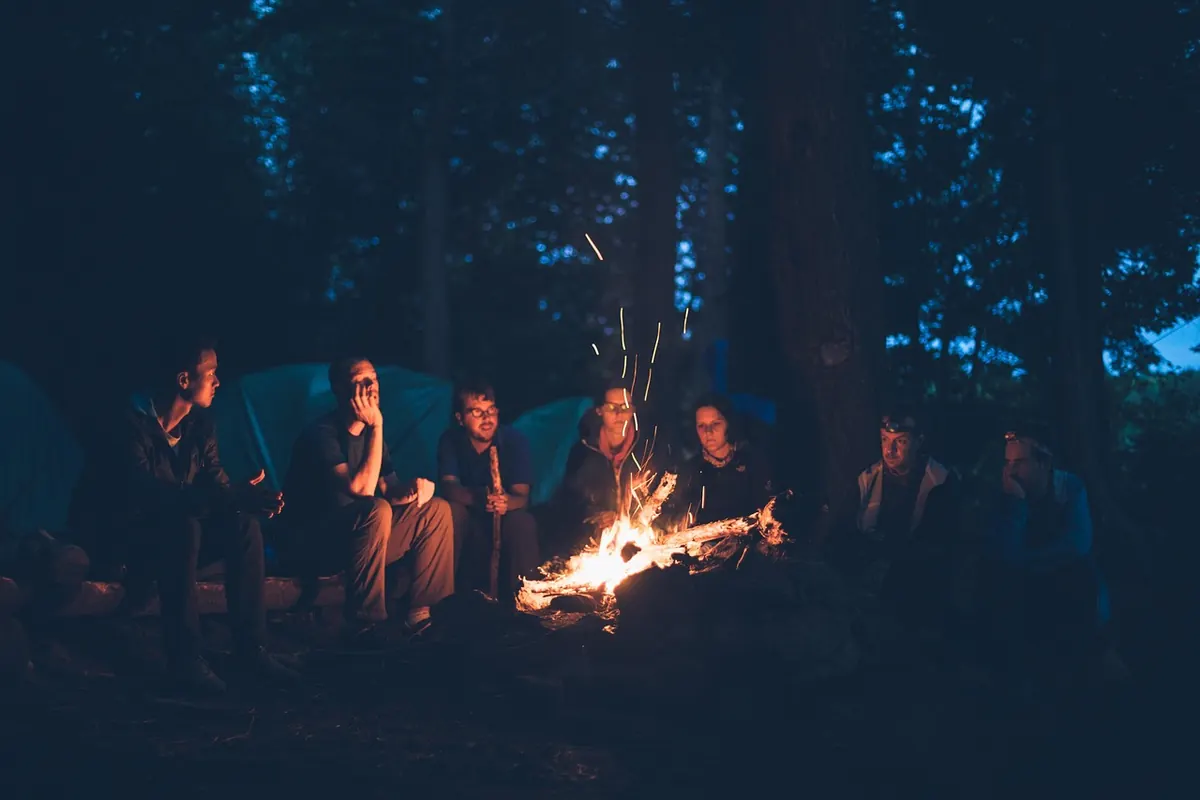
Photo: MorningbirdPhoto / Pixabay
You Might Also Like
A practical beginner's guide to haiku, explaining structure and seasonal words, with observation exercises, example rewrites and a month-by-month calendar of British weather and wildlife to write from.
A practical look at how written and spoken storytelling differ in rhythm, repetition and audience feedback — and what each form can teach the other.